
But you won’t be able to buy it, because the publisher suspended the book from sales shortly after publication. This can be seen as a variation on British historian Robert Conquest’s “second law of politics” (often attributed to British conservative pundit John O’Sullivan), which holds that any organization not explicitly right-wing will sooner or later become left-wing. THESE ISSUES ALSO HAVE SOME relevance to Bari Weiss’s own career six years after she first introduced the IDW to the wider public.
Intellectual Dark Web: Reading The Cancelled History Of A Prohibited Debate

This thirst explains how Johnson, a Christian husband and father, embraced and emulated Andrew Tate, a Muslim pimp and self-professed abuser of women, before defending himself by misappropriating a Bible verse. This thirst explains how Candace Owens went from being an immovable supporter of Israel to one of its most enthusiastic (and spectacularly ignorant) critics seemingly overnight, regurgitating the same antisemitic Wikipedia articles that were available while she was flying to Israel to celebrate the opening of the U.S. In recent years, a group has emerged that, while existing outside of the mainstream, represents the antithesis of the intellectual dark web. Its members make up the unintellectual dark web, where “unintellectual” doesn’t necessarily describe its members — well, not all of them — but it certainly describes its members’ output. At the Federalist, managing editorJoy Pullmann agrees, comparing the IDW’s rise to that of the talk radio phenomenon from the 1980s, where then “alternative media” personalities separated themselves from the mainstream to present their opinions unfiltered. Of course, this list is not comprehensive as no official list of IDW members exist.
Who Thinks Biden Is A Bigger Threat To Democracy Than Trump?
The introduction of gender-neutral pronouns (they/them) and, relatedly, the term “Latinx” (a gender-neutral term for Latino) are examples. For postmodern and “woke” thinkers, the “truth” that matters belongs to those without power in our society. According to this way of thinking, the less power you have, the greater your worth, and vice versa. For the intellectual dark web, the worst aspects of campus politics are driven by postmodernism’s degradation of traditional liberal values. Once, the great liberal objective was to try to grasp the truth – the nature of reality.
Share This Article
Another argument consistently alluded to by IDW proponents is the supposed coup by leftists in higher education. This strange, conspiratorial fixation fails to factor in a sound understanding of history, which, like a wave, must rise before falling. Yet some water never settles, and while the vociferous charge of “academic Marxism” makes zero sense (Marxism is based on the perpetual inquiry of power, which is exceedingly academic), to actually deny a budding form of intellectual praxis is, at bottom, a rejection of the slow, collective methodology and drive to create a bright future. For the past decade, this small, yet influential faction of self-styled iconoclasts have vehemently opposed political correctness, social justice theory, and postmodernism in academia and professional settings. While the sordid platformism of IDW personalities is somewhat nascent, their rebuke of contemporary modes of thought—their distaste for the panoply of pluralism —dates back to the early 2010s, and even the mid-aughts.
Neither text, nor links to other websites, is reviewed or endorsed by The Ohio State University. Liu Zhongjing believes that the Chinese, beginning from the administration of the Qin Dynasty, had become a fellaheen nation. Therefore, there is no Han ethnic group because the supposedly Han people are fellaheen. Fellaheen is not an ethnic identity, so they are simply slaves laboring under imperial bureaucracy. Also, he supports the idea of “various Chinese nations,” so in Sichuan, there’s a Basuria, in Hubei a Jingchuria, in Guangdong a Cantonia… It’s ridiculous, isn’t it? The conditions for constitutionalism come down to the situation in Washington.
Intellectual Dark Web: New Movement Or Just A Rebranding Of Old Ideas?
Andrew Sullivan published an entire issue of the New Republic devoted to presenting, and debating, Charles Murray’s claim that black people were, on average, less intelligent than white people. Whether the figures involved with the IDW can take credit for opening up the Overton window, though, is doubtful. That’s not much of a legacy, since “social media leave so many other people Telling Truths as well as those guys were trying to do,” McWhorter observes wryly. Maybe Bret Weinstein and Heather Heying deserve some credit for that, but at least as much is owed to Yale faculty members Nicholas and Erika Christakis, who are not affiliated with the IDW and also not crazy.
- The repeated outbreaks of fascination with the question of whether women and racial minorities are inherently unequal were not quite the product of the disinterested pursuit of the truth, Kitcher argued; otherwise, the same unpleasant questions would not keep appearing in radically different pseudoscientific forms.
- Being a conservative rather than a reactionary, Roosevelt’s former general, Dwight Eisenhower, reconciled with social welfare state and promoted integration once he won the presidency back for Republicans in 1953.
- But his demeanor can make him come across as a blunter instrument than he actually is, and he seems to enjoy the limelight too much to refine his message or change his tone.
- But in the case of the IDW, I’m going to argue that it was unable to offer a solution and, in fact, unable to even arrive at the necessity of a solution itself.
College Athletes Sue NCAA Over Redshirt Rule, Claim Antitrust Foul
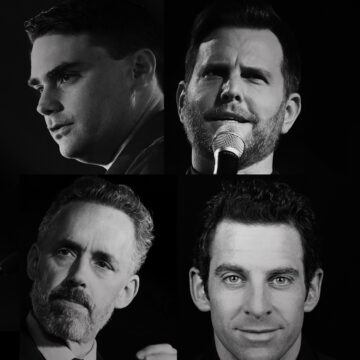
But that did not stop writers like Dinesh D’Souza from arguing that politically correct practices like affirmative action in college admissions were an affront to “equality of opportunity.” This latter term has long been part of the American right’s vocabulary, a central pillar of arguments against attempts at achieving greater social equality. Conservatives have tended to view democracy as a system that establishes equal rules for competition between private individuals; while liberals, progressives, and even many radicals have typically shared this view, the American left has historically supported interventions to guard against excessive inequality. During the campus wars at the end of the 20th century, “political correctness” joined the conservative conceptual arsenal to describe and fight against the left’s support for “equal outcomes” (it is perhaps no coincidence that this new term arose just as the Soviet Union was beginning to crumble). Intellectual Dark Web (IDW) is a phrase coined by mathematician Eric Weinstein referring to a loosely defined group of intellectuals, academics, political commentators who espouse controversial ideas and beliefs surrounding subjects related to free speech, identity politics and biology. In early May 2018, a New York Times op-ed written by staff editor Bari Weiss titled “Meet the Renegades of the Intellectual Dark Web” drew polarized reactions on social media. If the intellectual dark web were to acknowledge its place within the conservative tradition — or perhaps if the public were to acknowledge it for them — this might have some beneficial effects for American political discourse.
Discover Content
In response, Triggernometry host Konstantin Kisin has published a video and article defending Murray’s arguments from expertise and personal experience. Kisin cites the increasingly poor quality of public debate as evidence that he was mistaken in the core “anti-woke” contention that open debate always tends toward truth. Bret Weinstein has since weighed in, lamenting that Murray and Kisin have become what they once opposed. On March 1st, Redditor leocohen99 submitted a parody alignment chart with the caption “Intellectual Dark Web” to the /r/Jordan_Peterson_Memes4 subreddit (shown below).
Clippy PFP Movement
These new figures were also using new media, especially podcast platforms, to reach younger audiences and generate buzz for their intellectual movement. The term “Intellectual Dark Web” (IDW) describes a group of public intellectuals, academics, and commentators who engage in discussions on controversial, often politically sensitive topics that are typically avoided or censored in mainstream media and academic circles. In absolute terms, dark web intellectuals enjoy far more access to the mainstream than genuine leftists.
But I think the IDW has been and will continue to be, with other names and leaders, part of the ongoing dialectic evolution of our society. If the IDW ever really existed as anything more than a catchy, not-quite-serious brand name for an informal intellectual community, there is little doubt that it no longer does. A recently published short book by University of Sydney lecturer Jamie Roberts that charitably examines the IDW and its contributions to political dialogue, The Way of the Intellectual Dark Web, refers to it in the past tense. Onetime IDW fellow traveler Christopher Rufo wrote its obituary a year ago, arguing that the IDW fell apart because some of its members found Trump too icky and orange, some were unwilling to part ways with establishment science on COVID, and most of the rest lacked Rufo’s appetite for using political power to vanquish perceived enemies. Liberalism, which recognises human nature, is “the middle path” between identity politics on the left and reactionary politics on the right. Roberts had concerns about this in 2024 which are prescient of Lindsay’s post-election admonitions against the “Woke right”.
“Woke capitalism” is a concept that circulated within the intellectual dark web. It argues that identity politics might seem radical, but in fact works hand-in-glove with the corporate world. Rather than actually improving the lot of workers, many corporations prefer to make costless gestures by running diversity, equity and inclusion programs. Today, contrarianism on race and gender is liable to get fierce pushback in the publications of mainstream liberalism. Intellectual ties to the right can win you toleration if you are David Frum, Ross Douthat, or David Brooks. You may be recognized as a member of a minority that needs to be acknowledged, and as a possibly unreliable ally against Donald Trump Republicanism.
Get Podcast App
Since the discovery of Chinese troll farms churning out social media posts, it’s easy enough to imagine the jargon and rhetoric of the king troll of the intellectual dark web being weaponized, too. Liu has mostly stuck to his native tongue, despite taking to American social media platforms, suggesting that his Randian goals might be lost in translation. His engagement with Twitter is mostly limited to retweets of ethnic identity activists (the above tweet to the Concordia Association of Manchuria reads, basically, “Basuria congratulates the people of Manchukuo in strengthening their fight to recover their nation”). If we look at things from a historical point of view, Xinjiang, since ancient times, has had a closer relationship with Central Asia and Southwest Asia than East Asia. If we go back to the earliest periods of Chinese history, the Zhou and Han Dynasties, for example — the ethnic composition was different. What is now Gansu and the Hexi-Gansu Corridor used to be populated by people related to Persians.
As Marx would say, they’re the big landlord, the big capitalist… It would be like Marx establishing a Jewish state on the Rhine after a Thousand-Year Reich… The truth is that all the methods that hold China together would have to be torn apart to implement constitutionalism. In order to carry out constitutionalism, there would have to be a complete refutation of Leninism… Like the Israelis, the Chinese might escape from slavery only to find themselves wandering in the desert. “I was told that there had been complaints; however, despite asking, I was never told who complained nor the nature of the complaints,” continued Roberts.