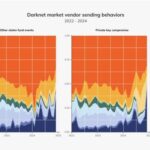

A dark web market is a hidden online platform where users can anonymously buy, sell, and trade illegal or sensitive items. Such markets are typically accessible through the Tor network, which anonymizes traffic by routing it through multiple relays and encrypting each layer. This encryption makes attribution and tracking more difficult for authorities and cybersecurity professionals. Our team searched the dark web and put together a list of the most active dark web marketplaces in order to assist you in monitoring illegal trade of products, cybercrime activity, and dark web trends in the dark web space. Although dark-web marketplaces utilize technologies like Tor and I2P to enhance anonymity, these methods are not foolproof. Law enforcement agencies continuously improve their ability to trace transactions and monitor marketplace activity.
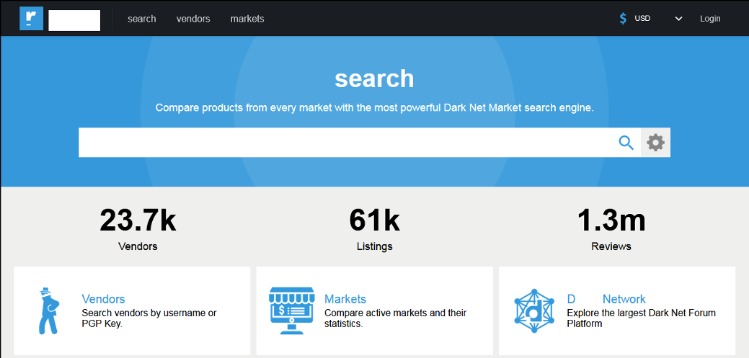
Trusted And Verified Dark Web Vendors’ List
To purchase weed from the dark web, you must first understand what the dark web is. The dark web is a part of the internet that is not indexed by search engines, making it difficult to access. It is also a haven for illegal activities, including the sale of drugs, weapons, and stolen goods. Each marketplace is a star-graph where the central node is the marketplace, and the leaf nodes, i.e., the first-neighbors, are the marketplace users. Therefore, all transactions involving the market have the market either as a source or as a destination node.
Missing The Wider Landscape Of Digital Harms
To turn it on, just go to the “Settings” and then the “Tools” section of the NordVPN app and activate “Dark Web Monitoring.” In the end, it’s all about staying one step ahead. The more proactive you are, the better you can protect yourself against identity theft and other cyber threats. As Telegram has end-to-end encryption and anonymous profiles, it makes it an ideal choice for threat actors and hackers to take advantage of. From there, these products are then passed on to distributors, which are the dark web marketplaces in this context. On these marketplaces, they’re listed, sold, and promoted just like items on any e-commerce site. Ulbricht faced several serious charges, including distributing illegal drugs, running a criminal enterprise, hacking, trafficking fake IDs, and money laundering.
- This model generates and evaluates variants of possible threats by utilizing advanced machine learning, computer vision, data augmentation, and NLP approaches.
- In the markets analysed, drug sales appear to originate primarily from the United Kingdom and Germany, however, the Netherlands is frequently cited as a source of some of the drugs on offer.
- If someone has the market’s code to the infrastructure, no matter how much effort law enforcement puts in, it will keep coming back on another server or can be built again with the same branding.
- Privacy advocates speculated that the FBI leveraged an experimental attack on Tor by Carnegie-Mellon University (CMU) researchers in early 2014.
In light of this, we have chosen the parameters conservatively, obtaining estimates for the number of sellers that are in general smaller than the ones produced by other methods. Second, our approach does not explicitly classify buyers, which are entities that were not classified as sellers. There is a gray zone in which some sellers and buyers may not be easily distinguishable in transaction networks. For instance, there may be sellers that make a small amount of transactions, or spend more than receive, which we would classify as buyers.
Some appear to be trying to maintain consumer confidence by informing buyers that they are operating in ‘business as usual’ mode. Others have reacted to reduced demand for some drugs by trying to stimulate sales using marketing techniques (e.g. discounts). Another group have opted to suspend their activities or explain to their buyers that they can expect some disruption. Like BlackSprut, WayAway vendors appear to be more focused on operating within Russia and Belarus as noted by the locations marketed by the ‘El Chapo’ mephedrone shop. WayAway also features a searchable collection of former Hydra store operators.
With a 99.9 percent detection rate and the lowest false positive rate of 1 in 1 million, SlashNext AI uses “Generative HumanAI,” a patented generative AI model, to fight cyber threats such as advanced business email compromise (BEC). This model generates and evaluates variants of possible threats by utilizing advanced machine learning, computer vision, data augmentation, and NLP approaches. SlashNext’s Generative HumanAI (shown in Fig. 20 helps develop and improve the system’s ability to identify and prevent future malicious behaviors by producing thousands of variations of a particular attack. Wu et al. (2021a) present an advanced intrusion detection system for IoT environments incorporating a DCGAN. Their method uses a fuzzy rough set of feature selection, a convolution neural network (CNN) for feature extraction, and a GAN to generate synthetic data. This method enhances the overall ability of the system to detect intrusions.
Power Your Insights With Data You Can Trust
New darknet market support sites were built and launched, such as drug-specific search engine Kilos, and Recon, a search engine and vendor-reputation service. Darknet drug markets — and the global supply chain that provides them with the goods to sell — depend on drugs imported from China. In February and March, many factories across China closed, among them chemical supply firms. Major UK-based online drug vendors told VICE News that turnover had increased by around 25 percent over the three-month UK lockdown through March, April and May. This came with a rash of orders from apparent newcomers with no knowledge of essential darkweb software such as PGP encryption.
Exposure To Malware And Scams

This kind of AI is capable of simulating malicious actors, detecting changing trends and patterns, and producing both positive and negative threat information. Having explored the various GenAI models, we now shift focus to their applications in the field of threat intelligence. Specifically, these models are being utilized for malware detection, anomaly detection, and addressing a wide range of security challenges. GenAI has the ability to recognize patterns and signs of a threat because of the vast datasets that are used to train its learning algorithm. This gives it the power to identify and neutralize threats in real-time before they get past the front-line defense.

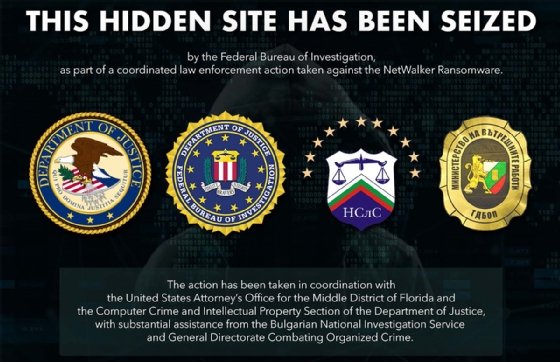
Archetyp Was One Of The Dark Web’s Biggest Drug Markets A Global Sting Has Shut It Down
The system uses AI-driven models to assess user intent, context, and activity patterns, automating the detection and response to risky behaviors. This adaptive, omnichannel approach continuously adapts security policies to reduce data loss, prevent unauthorized access, and mitigate insider threats. The platform’s integration of language models and relationship graphs helps differentiate between various types of threats and provides deep insights into user activities, improving decision-making and reducing manual intervention.
Tor Averaged More Than 461 Million Daily Users In Q3 Of 2023
Social engineering attacks remain a threat and highlight the importance of research into LLM-based phishing detection and mitigation strategies. Finally, the growing concerns over AI chatbots and the need for advanced defense mechanisms. To ensure that GenAI continues to contribute positively to CTI while minimizing its inherent vulnerabilities, ongoing research, adaptation, and real-time defense mechanisms are crucial. By addressing these emerging risks, we can better harness the power of GenAI for cybersecurity without compromising safety and security.
However, you can trace its roots to the development of technologies like the Tor network or Freenet. In March 2000, an Irish grad student named Ian Clarke created the software application, Freenet. This was the initial framework for anonymous communication and file sharing. Later in 2022, the US Naval Research Laboratory built on Freenet’s idea to create a secure and encrypted network for sensitive communications, which was later released to the public as open-source software. And, of course, think twice before sharing too much personal details online.
They conclude that LLaMA 3 does well in relatively easier tasks, such as indicating whether an email is a notification about cybersecurity announcements, especially for longer prompts. But in majority of the more complex tasks, the study indicated that consistency in the performance of LLaMA 3 was somewhat less than that of the performance of GPT-4. Jonkhout (2024) explore the use of various LLMs to help in the cybersecurity alarm analysis process to address alert overload among security defenders. From the results, it was clear that Llama3 showed quicker processing times and consistent output formats, making it suitable for tasks requiring fast and predictable responses.
Moreover, data scraped from the DWMs cannot assess the U2U transactions which account for the largest fraction of the total trading volume of the ecosystem13. As home to marketplaces that sell items like illegal drugs and firearms, the Dark Web can be extremely dangerous. Because it is anonymous, it also provides safety to drug dealers, hackers, and other criminals.
14 Dark Web Data
- According to experimental results, TFDPM performs up to 4 percent better than the current SOTA technique.
- The other LLMs showed slightly lower recall on real-world datasets but performed better than DeBERTa on synthetic datasets, which shows strong potential in identifying novel phishing patterns.
- Fieblinger et al. (2024) use LLama2 models in CTI to automatically extract actionable information from unstructured data.
- It advances threat detection, response, and situational awareness with features like real-time updates, data enrichment, and integration with security systems.
- It is important to research the seller before making a purchase to ensure that they are reliable and have good reviews.
Anand et al. (2018) introduced a new oversampling technique in the data space by using text-generative adversarial networks (text-GANs) to generate synthetic URLs for the minority class (phishy URLs). The authors collected phishy and benign URLs from a crowd-sourced URL repository for training. One of significant result was that the text-GAN model were able to sometimes exactly regenerate some of the original test URLs.
Premium-quality Malware Sold On The Dark Web For $4,500 In Q1 Of 2023
Fine-tuning BLIP on this dataset results in significant performance gains, especially when incorporating both text and image contrastive losses, improving deepfake detection accuracy and answer generation quality. This model not only enhances existing deepfake detection models like XceptionNet and HiFi-Net but also demonstrates strong generalization to newer deepfake generation methods such as StyleGAN2 and diffusion-based models. By combining image and text, this approach offers more context-driven answers, which can guide human analysts in decision-making, improving overall trust in detection systems.