

Close monitoring of renal function and hematological parameters after eculizumab withdrawal is mandatory; however, there are no evidence-based data about the reliability of a specific parameter and the optimal frequency of testing 33. These include the retrospective design, the limited number of patients treated, and their highly heterogeneous clinical presentation including the presence of both pediatric and adult cases. However, given the difficulties or the impossibility in promoting prospective control trials, real-world data are of paramount importance to understand the clinical potential of innovative treatment proposals in such a rare and often fatal disease. An additional limit is the lack of sC5-b9 data for the diagnosis of TA-TMA. It should be noted, however, that sC5b-9 is a marker of terminal complement activation and not specifically of lectin pathway activation.

Given the incomplete penetrance of the genetic defects, complement-activating conditions play an important role for the development of TMA 3, 21, 22. However, the central role of complement is undeniable, and the available evidence identifies it as a targetable pathway, providing a foundation for the use of eculizumab. In the last years, several case reports and retrospective studies showed eculizumab efficiency in this context (see ahead) 100, 101, 102, 103, 104. Lack of adequate response to complement blockage in some patients, on the other hand, suggests potential additional endothelial injury pathways, requiring more investigation 103.
Etiopathogenic Mechanisms And Complement Involvement In DITMA
Thrombotic microangiopathy (TMA) is a rare but potentially life threatening condition that affects the body’s small blood vessels. However, the presence of diarrhea is not sufficient to exclude other forms of TMA as ~ 30 – 40% of aHUS and TTP cases involve gastrointestinal symptoms, including bloody diarrhea 19, 20. A city with a population of 1 million will average only about 11 cases in a given year.
Platelet Count
Quinine-dependent antibodies reactive with platelets or other cells were reported for 24 of these 34 patients; drug-dependent antibodies were not reported for any other drug. For DITP, the target condition is defined simply by a platelet count less than 100,000/µL. In contrast, the clinical and pathologic features of TMA occur in multiple distinct complex disorders, making evaluation of a suspected drug etiology is more difficult.
Role Of Graft Versus Host Disease
Immunotherapy is an emerging strategy to treat solid and hematologic malignancies, improving overall survival. Immune checkpoint inhibitors (CPIs) are part of this class of drugs, consisting of monoclonal antibodies that target inhibitory receptors expressed on T cells 85. Some authors reported favourable results using eculizumab in carfilzomib-induced TMA.
She co-chairs the ClinGen complement gene curation expert panel, is a councilor in Women in Nephrology, has served on the ASN career advancement committee, and received the 2022 NKF “Award of Excellence”. Intravenous use of the extended-release opioid oxymorphone and oxycodone tablets reformulated with polyethylene oxide (PEO) have been reported to cause DITMA in many patients (3). Subsequently, intravenously administrated high molecular PEO was determined as the causative factor (15). Tyrosine kinase inhibitors (TKIs) are effective in the treatment of hematologic malignancies and solid tumors. Imatinib and ponatinib are small-molecule BCR-ABL TKIs, used mainly in the treatment of chronic myeloid leukemia. Cases reporting a link between the aforementioned TKIs and drug-induced TMA have been described in literature (6, 53–56).
A diagnostic and therapeutic algorithm, as well as a classification of thrombotic microangiopathies, are shown in Figure 1, Table 1, eTable 2, and eTable 3, and the relevant differential diagnoses, in eTable 1. The establishment of a nationwide disease registry in Germany with a biobank would now be desirable. HELLP is a more severe form of the disease spectrum, which can lead to a glomerular endotheliosis. There is known endothelial dysfunction thought to be due to greater circulating levels of the soluble form of the vascular endothelial growth factor receptor (sFlt‐1), syncytiotrophoblast‐derived antiangiogenic factors and soluble endoglin. During the last decade, laboratory criteria have been added to support the causal relationship between a drug and TMA (2).
Reassessment Of Oklahoma Registry Patients
She was diagnosed with pancreatic cancer 30 months prior to admission and since then treated with gemcitabine and Nab-paclitaxel. Chemotherapy had been discontinued 6 weeks earlier when a decline in renal function, hemolytic anemia, and mild thrombocytopenia (130/µL) was first noted. While more than 130 adult and pediatric TA-TMA patients have been treated to date under the narsoplimab extended access program (EAP), our study is limited to the 20 EAP patients treated at our institutions.

DITMA accounts for 10%–13% of all TMA cases and about 20%–30% of the secondary TMAs, representing the third most frequent cause, after pregnancy-related and infection-related forms (Bayer et al., 2019; Beloncle et al., 2021). The real incidence of DITMA remains undetermined but is probably underestimated. We report on two patients with chemotherapy-induced TMA, persistent after discontinuation of the culprit drug and TPE/plasma infusion. In both patients, the clinical response to therapy with eculizumab was prompt and remission stable after cessation of treatment. Treatment with eculizumab was well tolerated, and no adverse events were reported. Tumor-induced TMA (TiTMA) is a relatively rare paraneoplastic syndrome, with little incidence data.
Thrombotic Microangiopathy (TMA) Region
Despite discontinuation of gemcitabine, 7 (24%) patients progressed to end-stage renal disease (ESRD), and 3 (10%) patients developed chronic renal failure 30. These reports and our observation support induction therapy with eculizumab in cases of persisting TMA. Due to limited clinical experience, the optimal strategy for treatment of chemotherapy-induced TMA, especially the role of eculizumab, is not yet clear. Discontinuation of the offending drug and supportive care are the primary treatment options. Due to the long turnaround time for us to receive the results of the ADAMTS13 activity plasma infusions (case #2) and therapeutic plasma exchange (case #1) was initially used. Atypical hemolytic uremic syndrome (aHUS) is a complement-mediated TMA caused by dysregulation of the alternative complement pathway.
Treatment is based on immediate and permanent drug cessation 30,34 and recurrence has been described with repeated exposure 32. Despite the pathological mechanism, response to plasmapheresis is poor 30,34,35. Few case reports document successful use of rituximab 11,36,37 and eculizumab 35,38,39. Given the wide spectrum of potential causes for TMA in cancer patients, the aim of this review is to gather the vast information available. For each entity, pathophysiological mechanisms, clinical features, therapeutic approaches and prognosis will be covered.
ADAMTS13 Tests
- Our goal was to assist clinicians in their evaluation of patients with suspected TMA by developing standardized criteria for assessing clinical evidence.
- Triggers are tumors, stem cell transplantation, use of medications, pregnancy, autoimmune diseases, kidney disease, or malignant hypertension (etable 2).
- Direct injury to endothelial cells makes them more susceptible to TMA after another insult 147.
- The secondary forms of TMA include an extensive range of causes, varying from infections to cancer, pregnancy, malignant hypertension, drugs, solid or hematopoietic transplantation, and autoimmune or metabolic diseases, etc.
- At least one case report reported successfully on the use of eculizumab 57.
- It is interesting to note that relapse was almost exclusively seen in those with a pathogenic mutations, although conversely not all individuals with mutations relapsed.
Mucosal denudation, involving the loss of surface epithelium, often replaced by a single layer of regenerative enterocytes. B Widespread sloughing of epithelial cells and perivascular hemorrhages in the mucosa, indicated by the extravasation of red blood cells (RBC) from capillaries in the lamina propria. D Endothelial cell swelling, characterized by the enlargement of endothelial cells in the capillaries of the lamina propria. Routine blood examinations were collected prior to each narsoplimab dose and then twice weekly.
Table IV
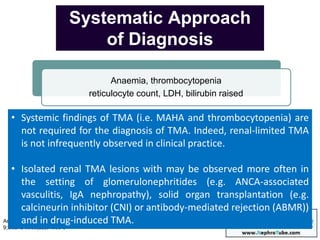
Such patients have high rates of progression to kidney failure and disease recurrence after transplantation. In a large study by Cavero et.al (Figure 5), 20% of the patients with malignant hypertension had TMA, and 60% of those were due to aHUS. Over 70% ultimately required dialysis, much worse than those without TMA.
Autoimmune Diseases With Thrombotic Microangiopathy Or Similar Clinical Pictures
- TMA should be suspected in patients who develop new-onset or exacerbation of HTN, requiring more than 2 anti-hypertensive drugs.
- The absence of genetic abnormalities in most patients does not exclude participation of complement in the pathogenesis of DITMA and other secondary TMAs.
- Complement blockers may be helpful in select cases, and trials in this disease space are ongoing.
- This is described for example for interferon (Kavanagh et al., 2016), oxaliplatin and gemcitabine (Al-Nouri et al., 2015; Saleem et al., 2018).
- Gemcitabine is the chemotherapeutic drug with the strongest evidence of toxicity by both direct endothelial damage and deposition of immune complexes 32,33.
- The presence of such variants is particularly vexing for clinical management.
However, the possible side effects, especially the risk of meningococcal infection, the inconvenience of a bi-monthly application, and the significant costs have prompted interest in alternative dosing schedules and complete discontinuation. A recent review analyzed data from unpublished cases, published case reports, clinical trials, and the Global aHUS Registry regarding patient outcomes after eculizumab discontinuation 31. Of the case reports, a subsequent TMA manifestation was observed in 31% (16/52) of patients after eculizumab discontinuation. Data from five clinical trials documented a relapse in 20% (12/61) of patients after cessation of therapy with eculizumab with a median follow-up of 24 weeks.
The absence of genetic abnormalities in most patients does not exclude participation of complement in the pathogenesis of DITMA and other secondary TMAs. In fact, the activated procoagulant and proinflammatory endothelial cell phenotype characteristic of DITMA can induce a non-specific activation of complement, which in turn can promote and aggravate TMA (Duineveld and Wetzels, 2019; Frémeaux-Bacchi et al., 2019). In severe hypertension, thrombotic microangiopathy may result from endothelial cell damage.